


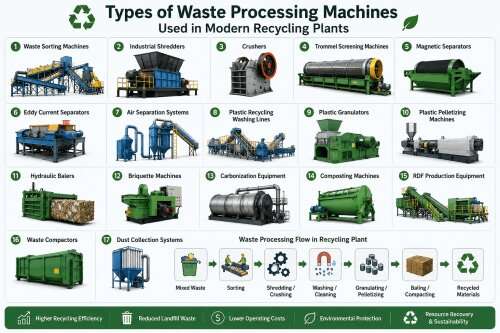
Today's recycling plants use all kinds of machines to carefully and efficiently deal with waste. Individual machines are responsible for particular tasks, ranging from the degradation of waste to material separation and re-processing. Knowing these types of machines will make it easier to plan a plant better and select the right equipment. This article describes the principles of waste-processing machines currently available.
Large items of waste may often require being broken up before the sorting process can start. This is achieved through shredders, which break the waste down into smaller, manageable chunks. This applies to plastics, wood products, metal scrap, and even tires. Smaller pieces will flow through the system easily and will be easier to sort.
The size reduction is also beneficial for transport and storage. Compact waste is easier to store; therefore, it is easier to recycle in the later stages of the recycling process.
Shredders have various types of blades depending on the material's hardness. However, softer materials such as plastic film require sharper, more speedy blades. Slower machines with high torque are employed on materials such as metal scrap to decrease the risk of damage to the machine.
Crushers are used in addition to the shredders on harder materials like concrete or glass. Grinders further break up the material, primarily for organic waste, which will be used for composting. These machines prepare waste for the next steps in the processing.
So what do screening machines do?
Screening machines are used to sort waste by size. Materials are placed in screens or rotating drums having different hole sizes. Smaller parts pass through, whereas larger ones go forward to be sorted again. An example is a trommel screen. They are rotated slowly, and the separation is primarily due to gravity. This step generally takes place at the beginning of the recycling line, after shredding.
Vibrating screens operate under vibration, not rotation. The vibrating surface has meshes through which the waste is sent. This method is suitable for light, fine materials that require precise separation.
Mixed wastes often have metal contamination. Strong magnets above conveyor belts are used for magnetic separators to remove ferrous material such as iron and steel. This protects other machines from damage.
Eddy current separators employ a rotating magnetic field to remove these metals from various waste materials. These two machines work hand in hand to remove most of the metal from mixed wastes. Earlier recovery of metal also helps to protect downstream equipment. If sharp metal pieces remain in the material for too long, they may cause damage to shredder blades and screening surfaces.
The optical sorters use cameras and infrared sensors to scan the waste. They have different light reflectivity, which allows for the detection of different plastic types, colors, and paper grades. Then a puff of air blasts the identified item away. This technology has greatly improved sorting accuracy. Optical sorters are frequently used to boost the recovery of recyclable plastics and paper at plants that rely on manual selection.
Air classifiers are separation devices that use airflow to separate waste by weight. Light-weight materials such as paper or plastic film are picked up and transported in one direction. The heavier objects, such as glass and stone, fall in another direction. This method is suitable for mixed solid waste with a distinct density difference.
A ballistic separator separates waste using moving paddles that sort the material into three particle sizes: flat, round, and fine. This machine is particularly helpful in separating paper and cardboard from bottles, cans, and round products.
This separation process reduces a lot of manual effort. The position of the workers no longer requires manual sorting of flat or round components, thereby accelerating the entire sorting line.
Balers compress the sorted items such as paper, plastic, and cardboard into blocks. This is because storage and transportation have become easier and more efficient. Compressed bales also sell for better prices to material buyers. The purpose of the compactors is slightly different. They improve the reuse of waste that would otherwise go to the landfill, rather than back to consumers. Both are used for space management in a recycling plant.
A recycling plant has conveyor belts to move the machines. They automatically transfer the waste from one processing stage to the next. In certain plants, workers are placed alongside conveyor lines to handpick items that machines might overlook. This is the system that ensures the whole operation runs seamlessly. If the conveyors didn't work, waste would have to be carried manually, reducing the overall speed of the operation.
Not every recycler deals exclusively with plastic, metal, and paper. Additionally, many people compost organic waste. Shredders and grinders reduce food scraps and yard waste. This material is then sent to composting units where it breaks down into usable soil material.
Some facilities will also add composting post-processing. This gets rid of any leftover plastic fragments or particles, leaving the compost cleaner, which is suitable for use in farming or landscaping.
There is no single machine that does everything in the recycling process. Several machines of different types are generally used in tandem to address an individual plant's waste stream. But it's common to find all four shredders, screens, separators, and balers used in a municipal solid waste facility. With fewer machines that specialize in particular material types, smaller, specialized plants may be required.
The logistics of materials and waste volumes, carried out daily, help determine the appropriate equipment. This aspect of planning can prevent overinvesting in machines that may not meet an organization's operational requirements.
Energy efficiency in contemporary machinery.
Recycling plants are becoming aware of increasing energy consumption. High electricity bills can result if several machines run all day. There are now many manufacturers producing equipment with innovative control systems and energy-efficient motors to reduce power consumption. Some even feature auto shut-off functionality when the machine is not in use. This small bump allows the plant to reduce the energy required but hardly affects overall plant processing.
In recycling, modern plants rely on a multitude of machines that work together. Shredders, screens, magnetic separators, and balers each serve a distinct function in the process of converting waste into a valuable product. This combination will vary depending on the type and quantity of waste, as well as the budget. The right machinery can increase capacity and improve the recovery of valuable materials from household waste in recycling plants.
1- Which is the best place to purchase waste processing machines wholesale for my retail store?
Purchase from a manufacturer that accepts bulk orders. Typically, this leads to improved price and stabilized product quality.
2- How to buy waste processing machines in wholesale at affordable rates?
Get quotes from several suppliers and inquire about wholesale pricing.
3- Where can I get a waste processing machine supplier and customization?
Find manufacturers with their own engineering staff. Some provide customization based on the type of waste and the capacity requirements of waste treatment plants.
4- Which is a waste processing tools supplier that provides bulk supply with customization at low costs?
Yes, some manufacturers offer bulk pricing and customization services. Talk to suppliers individually about project requirements.
5- How often do waste processing machines need maintenance?
The maintenance protocols to ensure performance and prevent breakdowns vary by machine type, but most require periodic inspections every few months.
https://www.kuntengmachineryltd.com/blogs/top-10-solid-waste-sorting-recycling-equipment
The carbonization equipment operates at low oxygen with organic wastes and generates three produc
READ FULLThe carbonization equipment uses raw organic matter to produce charcoal, biochar, or activated ca
READ FULL