

Waste management is a growing challenge across the world. Cities generate tons of garbage every day. If not sorted properly, most of it ends up in the waste landfill. Recycling equipment helps sort useful products from waste. Waste plants benefit from saving time, labor, and money. This article will discuss the most important solid waste sorting and recycling machines. They each play a different role, and collectively, they help clean up waste more quickly.
Quick Tip: Many recycling facilities today rely on China waste sorting equipment for their sorting lines, since manufacturers there often provide a wide range of machine types at different capacities. If you're planning a new plant or upgrading an existing one, comparing options from multiple regions can help you find the right balance of features, durability, and budget before making a purchase decision.
A trommel screen is a rotating drum with holes. As the drum rotates, the waste material goes through. The small things go through the holes. Larger objects remain in and continue moving. This machine is used to separate waste according to size. It is also often an initial step of the sorting line.
Different drum sizes produce different effects. Several trommels are segmented to separate particles by size. This helps sort waste into 3 or 4 size categories at a time. This is a first step that makes subsequent sorting easier and quicker.
Most garbage loads normally contain metal trash. The magnetic separator automatically removes iron and steel products. It uses very powerful magnets above or below a conveyor belt. This equipment helps prevent damage to other machines caused by metal. It also recycles valuable scrap metal for resale.
Certain plants have drum-type magnetic separators. A few people use overhead belt magnets. Either can be used successfully; the type utilized will depend on the quantity of metal in the waste stream. The higher the metal content, the stronger and more frequent the separation setup is required.
Some metals do not attract magnets. This does not apply to aluminum and copper. An eddy current separator is a machine that separates non-magnetic metal from other waste products by using a rotating magnetic field. They are also seen in many recycling facilities that process cans and electronic scrap.
An air classifier is used to sort light and heavy waste due to airflow. Paper, plastic film, and other light materials rise off the ground. Glass, stone, and other heavy goods weigh down. This machine is designed to reduce labor and to speed sorting.
Optical sorters use cameras and sensors to help sort materials. They can distinguish among types and colors of plastic, and even paper grades. Once they are recognized, a burst of air pushes the product into the appropriate bin. This machine improves accuracy in plastic and paper recycling.
In many instances, this tool requires near-infrared technology. It can scan thousands of items per minute. This speed makes optical sorters popular in large recycling facilities with high daily volume.
A ballistic separator sorts waste into three categories using paddle motion. These are categorized as flat items, round items, and fine particles. A paper or cardboard is moved in one direction. There are other ways bottles and cans are moved. This machine is suitable for mixed municipal waste.
A shredder will reduce big trash into smaller pieces. Smaller particles can be more easily sorted, moved, and processed. Plastics and wood, tires, and metal scrap are shredded. This usually occurs at the beginning of the recycling program.
Paper, plastic, and cardboard must be compressed after sorting. These are compressed into tight blocks using a baler. This makes transporting and storage simple. It also boosts the value of recyclable materials sold to buyers.
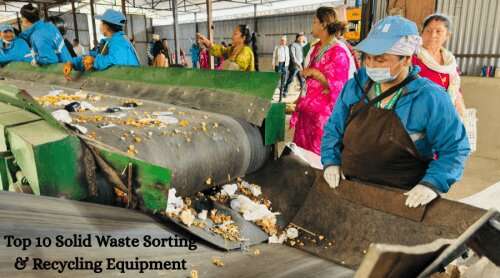
A recycling plant has several machines that are connected by a conveyor belt. It transports garbage from one station to another. There might be people or robots standing on the belt to select specific items. With this system, the sorting line works all the way around.
Well, the two are not alike. A compactor is a garbage-crushing machine that crushes waste for disposal. A baler machine is used to press sorted material into blocks for sale. Compactors are frequently seen in transfer stations and landfills.
All of these machines are used in combination. Many are used by a typical recycling plant in a specific sequence. The waste first passes through a trommel to sort by size. Next, metals are removed by magnetic separators and eddy current separators. Air classifiers and ballistic separators are used to separate light and heavy. The optical sorters fine-tune the process by material type. Finally, balers and compactors are used to ready the products for storage or sale.
This combination helps to minimize manual sorting. There's also more material recovered for recycling than is dumped.
· Good sorting equipment minimizes waste in landfills. Recycling plants equipped with modern equipment process more waste in less time. This reduces the amount of manual handling required by workers and lowers the running costs.
· For this equipment, the buyer should consider the plant's size, the type of waste, and the daily volume. Not all ten machines are required for every plant. If a smaller business is operating, only a few basic shredding machines and balers may be required. Larger plants typically use a full sorting line with several machines running in parallel.
· This is also an environmental aspect. Each ton collected reduces the amount of garbage dumped in landfills. Landfills emit toxic gases over time. Recycling equipment can reduce this by ensuring more material remains in use.
Selection of appropriate equipment to meet the requirements.
All waste streams are unique. Different equipment is required for municipal solid waste than for construction garbage or electronic waste. It is beneficial to research the type of waste being processed before purchasing machinery. This includes material size, moisture content, and the ratios of mixed materials. Another thing to consider is maintenance. Equipment such as the trommel screens and shredders should be properly maintained.
Today, waste-sorting and recycling plants rely on solid-waste sorting machines. Every machine has a distinct function, from trommel screens to baling machines. They process and transform waste mixtures into recycled material.
By investing in the right equipment, plants can save money, minimize landfill waste, and invest in a cleaner environment. These ten machines are a good beginning when it comes to large-scale waste companies.
1- What is the best place to find waste sorting machines on the wholesale market for retail sale?
Purchase from manufacturers that offer bulk orders. This avoids extra markup from intermediaries and ensures better pricing.
2- What is the best supplier of waste sorting equipment that does some customization?
Search for companies that have their engineering staff on board. They can resize the machine and capacity according to their needs.
3- What is the time required for the installation of this equipment?
Installation time varies according to plant size and machine type. Simple setups require a few days, while full sorting lines may require a few weeks.
4- Are there any suppliers that offer bulk supply with customization at low prices?
Yes, many manufacturers offer bulk pricing and customization. Contact directly for project requirements and a quote.
5- How to buy waste sorting equipment wholesale at affordable rates?
Shop around for quotes from several suppliers. Inquire about wholesale prices with higher order volumes.
Choosing the right equipment can make a real difference in how a plant runs day to day. Kunteng Machinery offers a complete range of sorting machines for waste recycling, including trommel screens, magnetic separators, optical sorters, and balers, built to handle different waste types and plant sizes. Whether starting a new sorting line or upgrading an existing one, their team can help match equipment to specific needs and budget. Reach out to discuss requirements and get a quote.
The carbonization equipment operates at low oxygen with organic wastes and generates three produc
READ FULLThe carbonization equipment uses raw organic matter to produce charcoal, biochar, or activated ca
READ FULL